

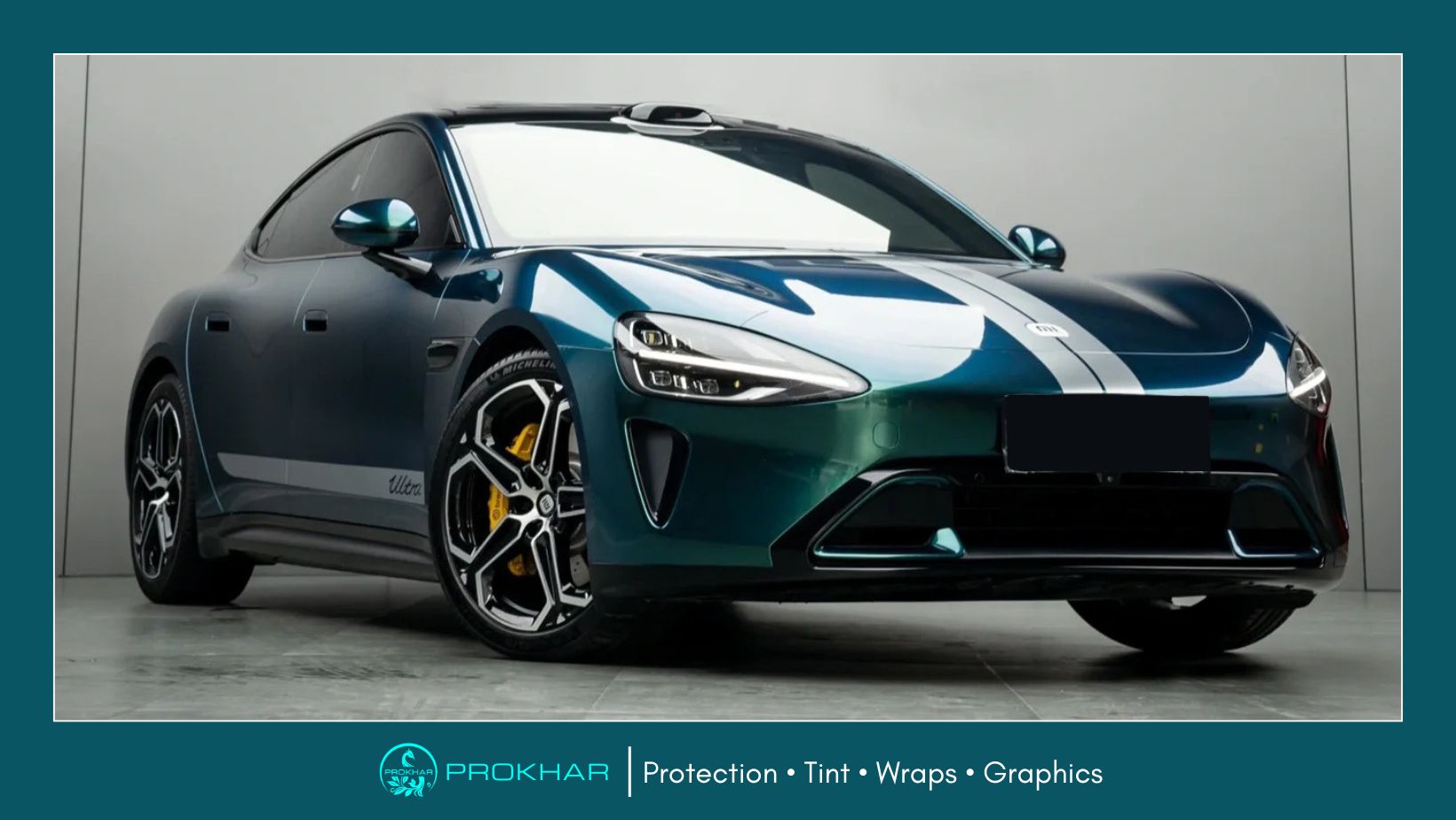
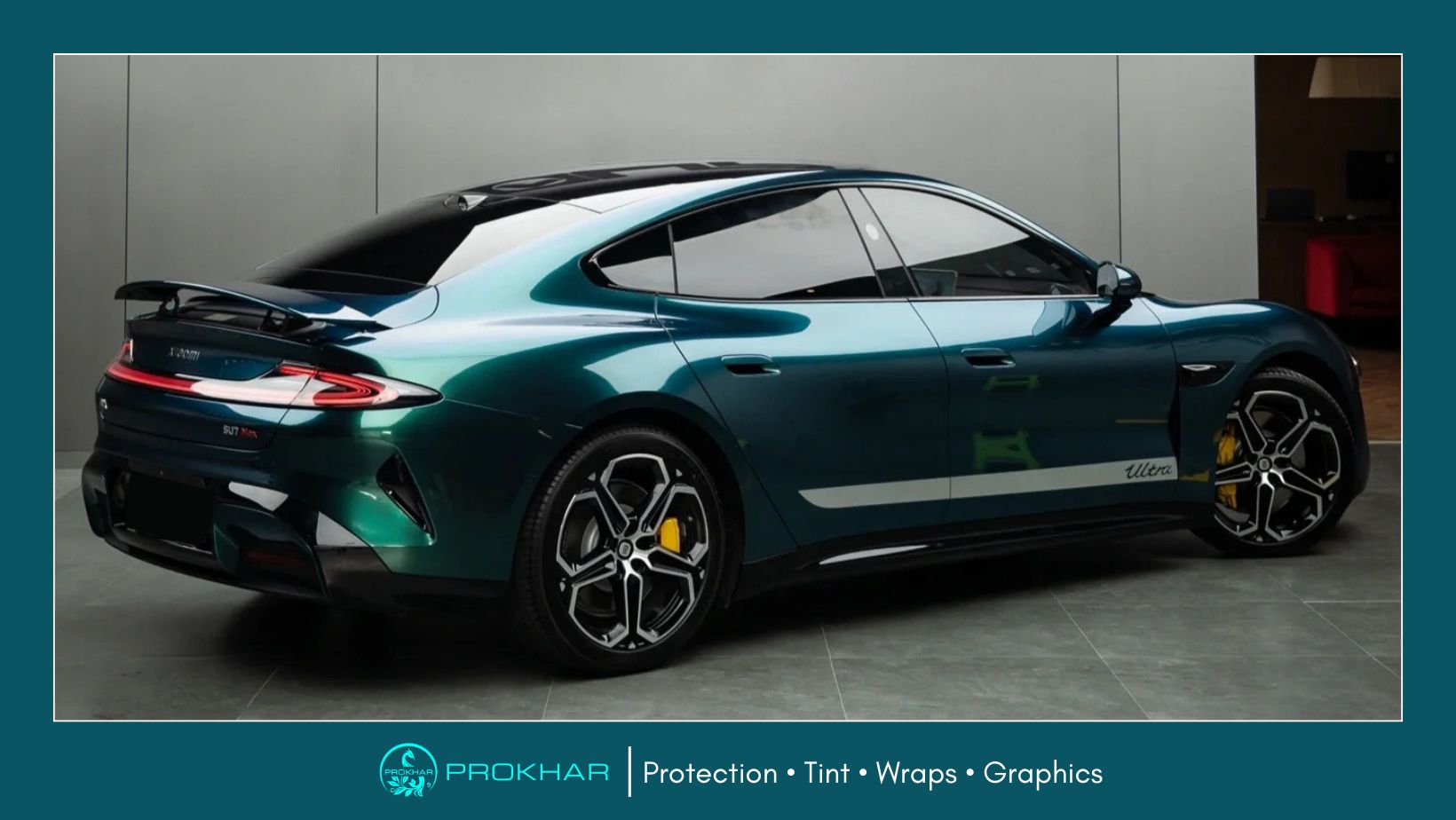
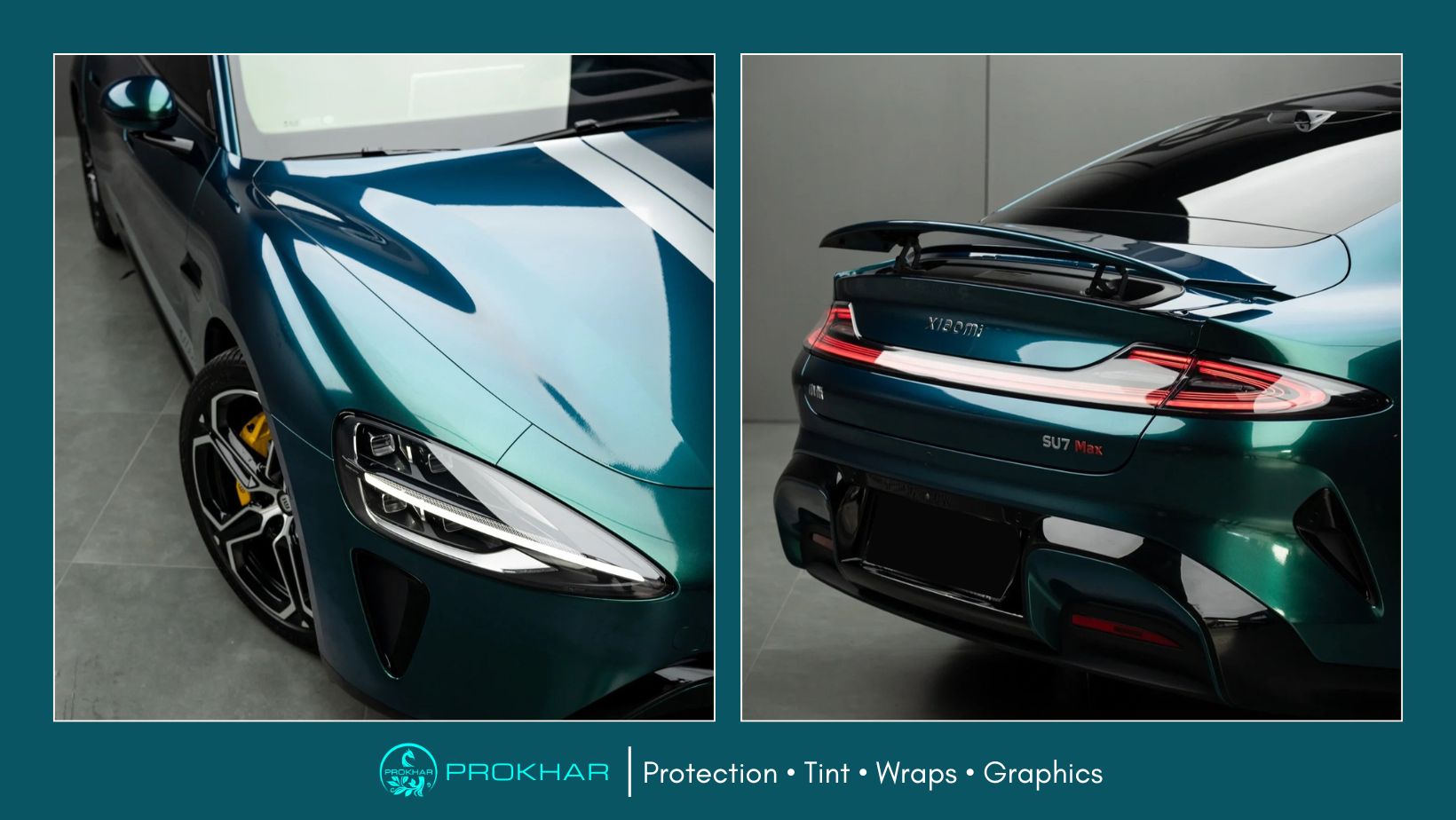
TPU Car Wrap Structure & Key Properties
What Is TPU Car Wrap Structure? Key Properties & Tech Guide
The automotive aftermarket is witnessing a paradigm shift. For years, distributors and detailing shop owners had to choose between the aesthetic versatility of PVC color-changing film and the robust protection of TPU Paint Protection Film (PPF). Today, the emergence of the car wrap made from Thermoplastic Polyurethane (TPU) has bridged this gap. This article provides a deep technical analysis of the TPU wrap film structure, its manufacturing processes, and why it is becoming the gold standard for high-end car wrapping businesses worldwide.
The Evolution: From PVC Vinyl to TPU Car Wrap
Historically, the industry was divided. PVC-based vehicle wrap products were the go-to for color transformations due to their low production cost and vast color palette. However, PVC is inherently brittle, prone to orange peel textures, and offers minimal physical protection against road debris. On the other hand, TPU was reserved for “invisible” protection.
As a leading TPU Car Wrap Supplier, PROKHAR has observed a surging demand for products that offer “Paint-Like” finishes with “Armor-Like” durability. The modern car wrap is no longer just a sticker; it is a sophisticated multi-layered polymer system designed to preserve the vehicle’s residual value while providing a bespoke aesthetic. Understanding the internal architecture of these films is crucial for B2B buyers to justify the TPU Car Wrap Price to their local markets.
Deep Dive: The 3 Core Structures of Modern Vehicle Wrap
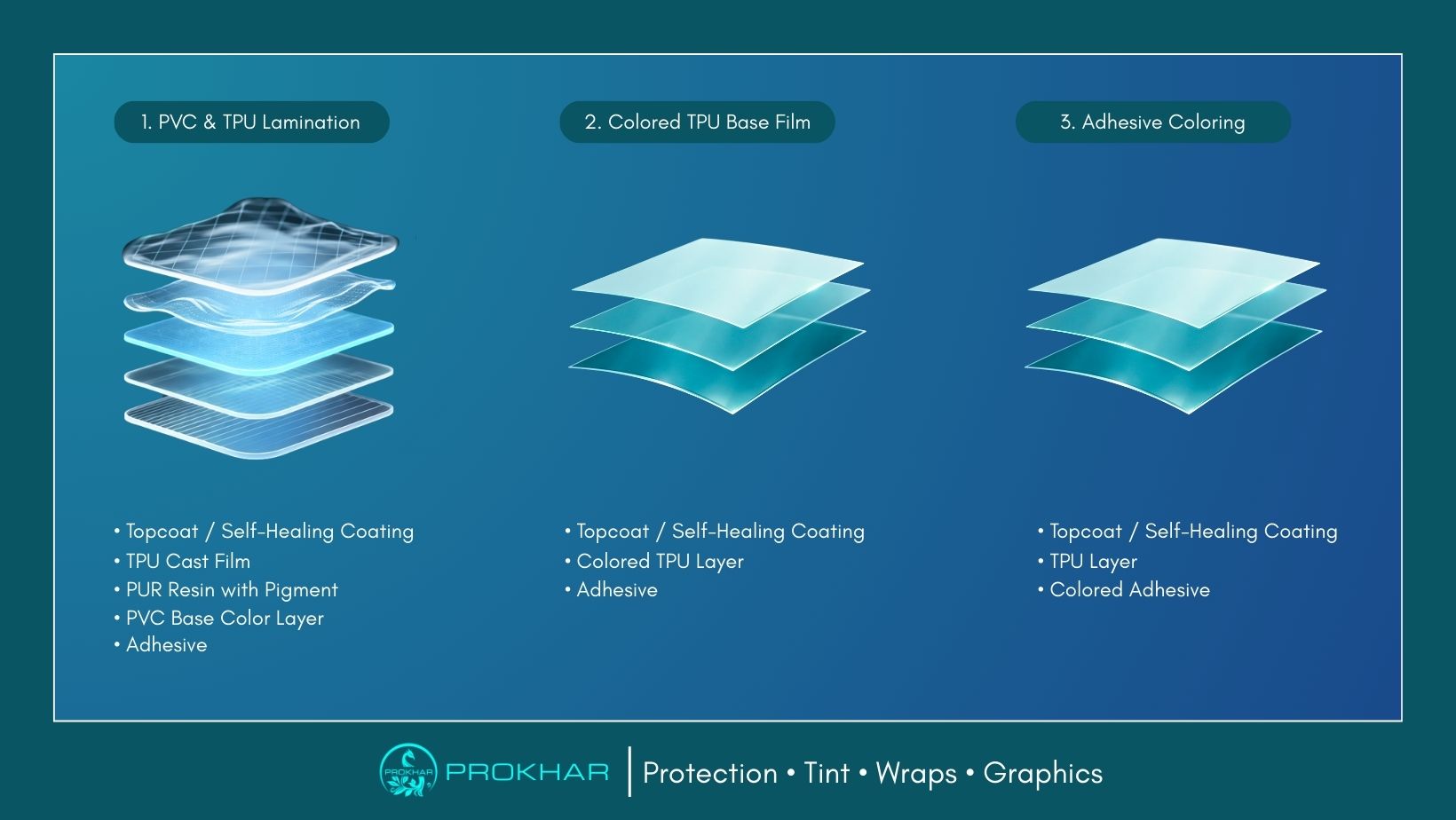
Not all TPU color-changing films are created equal. The manufacturing process determines the film’s longevity, installation ease, and protective capabilities. Currently, the global market utilizes three primary structural designs.
1. PVC & TPU Lamination (The Hybrid Approach)
This structure involves bonding a thin layer of colored PVC onto a clear TPU base. This “sandwich” method was the industry’s first attempt to create a functional color-changing wrap film.
- The Advantage: By using PVC for the color layer, manufacturers can offer an almost unlimited range of hues and textures. Additionally, the TPU Car Wrap Price for laminated products is generally more accessible for entry-level markets.
- The Drawback: Because PVC and TPU have different thermal expansion coefficients and elasticity, delamination is a significant risk. Over time, the layers may separate, especially in extreme climates. Furthermore, the overall thickness of each material is often reduced to keep the film pliable, which compromises the impact resistance that a vehicle wrap should provide.
2. TPU Base with Liquid Pigment Coating
In this method, a transparent TPU base is coated with a liquid TPU resin infused with pigments. This is primarily a technique used by high-end PPF factories.
- The Advantage: Since the color layer is also TPU-based, the chemical bond is much stronger than PVC lamination. This results in a car wrap that behaves like a single unit, offering excellent stretchability during the car wrapping process.
- The Drawback: Achieving color consistency with liquid pigments is technically challenging. This often limits the color selection to solid “Crystal” series (Black, Red, Grey, etc.). For distributors looking for complex metallic or iridescent finishes, this structure may feel limited.
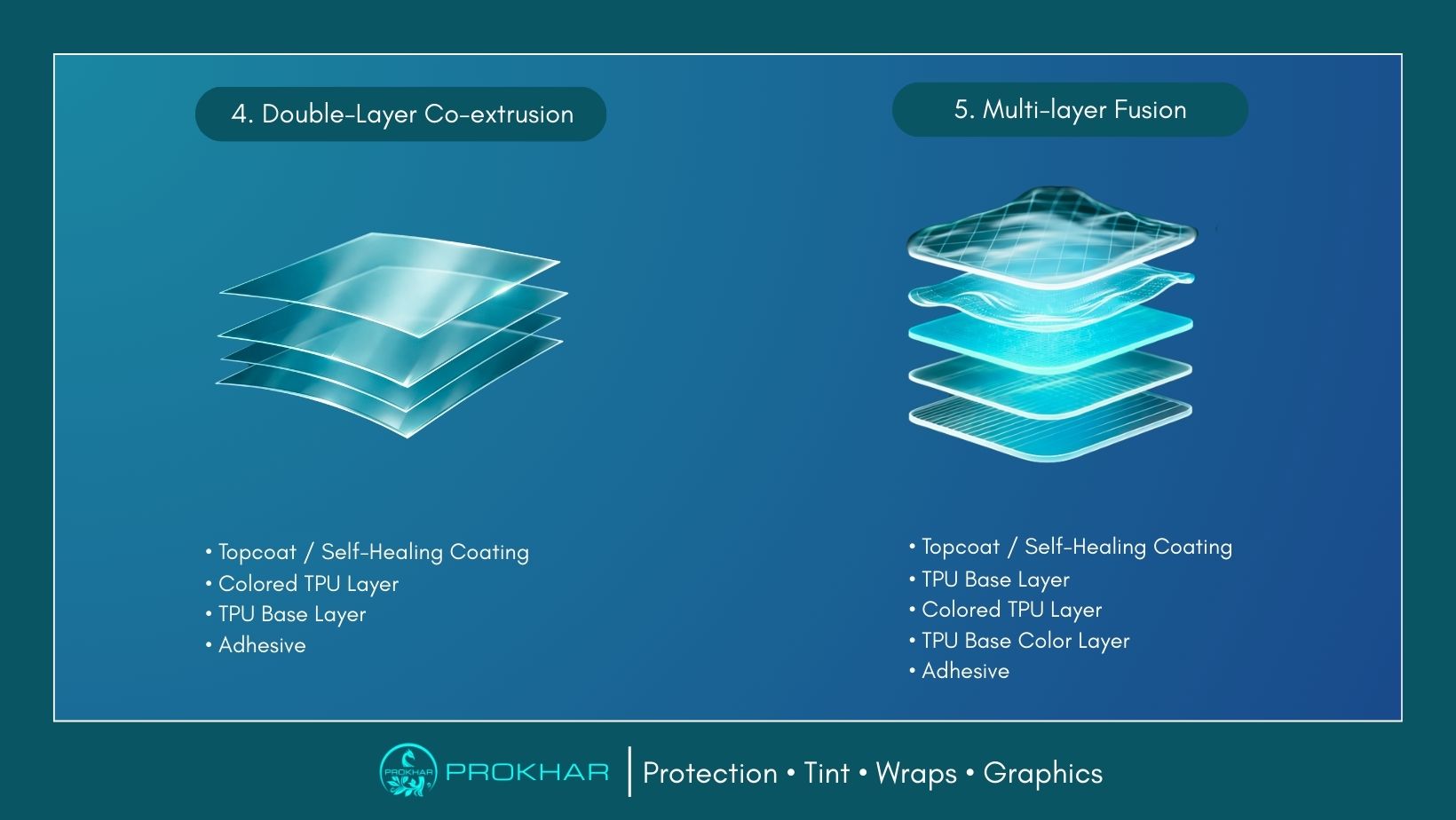
3. Double-Layer Co-extrusion (The Premium Standard)
This is the pinnacle of current wrap film technology and the method favored for a TPU Wrap For Luxury Cars. It uses a dual-manifold extrusion system to fuse a colored TPU top layer with a high-opacity TPU base layer simultaneously.
- The Innovation: The “Real Paint” effect is achieved because the pigments (often nano-ceramic materials) are integrated into the TPU resin before it is formed. This ensures the color is deep, vibrant, and resistant to fading.
- The Advantage: There is zero risk of delamination because the layers are fused at a molecular level during the molten stage. This structure provides the highest level of gloss and the most reliable self-healing properties, making it the preferred choice for a professional TPU Car Wrap Supplier.
Key Properties That Define High-End Car Wrapping
When evaluating a vehicle wrap for your distribution inventory, four technical properties should be prioritized to ensure customer satisfaction and reduce after-sales claims.
Superior Self-Healing and Elasticity
The hallmark of TPU is its “memory” effect. Unlike traditional PVC car wrap which permanently scars when scratched, a high-quality TPU wrap film can heal swirl marks and minor abrasions when exposed to heat. For the installer, the high elasticity means the film can be draped over complex curves without the “whitening” or “ghosting” often seen in cheaper materials.
High Gloss and Surface Clarity
B2B clients, particularly those servicing the luxury segment, demand a “Paint-Like” finish. Modern TPU structures eliminate the “orange peel” texture common in vinyl. By utilizing an ultra-smooth PET liner, the surface tension of the film remains perfectly flat, resulting in a mirror-like reflection that enhances the vehicle’s lines.
Chemical and UV Resistance
A vehicle wrap is constantly bombarded by environmental pollutants, bird droppings, and intense UV radiation. PROKHAR’s TPU formulations include advanced UV absorbers and light stabilizers (HALS). This prevents the pigment from oxidizing and ensures the film does not become brittle or yellow over its 3-to-5-year lifespan.
Pressure-Sensitive Adhesive (PSA) Technology
The success of a car wrapping project depends heavily on the glue. A premium TPU Car Wrap Supplier uses low-initial-tack, pressure-sensitive adhesives. This allows the installer to reposition the film multiple times without leaving “glue lines” or “stop marks.” Once the final pressure is applied and the film is post-heated, the bond becomes secure and permanent.
Why B2B Distributors Choose TPU Wrap For Luxury Cars
For a dealership or a high-end detailing studio, the ROI of a TPU-based car wrap is significantly higher than PVC. While the initial TPU Car Wrap Price is higher, the value proposition to the end-user is far more compelling.
- Dual-Functionality: The customer gets the “Cool Factor” of a new color plus the “Peace of Mind” of PPF-level protection.
- Labor Efficiency: Because TPU is more forgiving and conformable, experienced installers can complete a car wrapping job faster and with fewer errors, increasing the shop’s throughput.
- Brand Reputation: Using a premium wrap film reduces the likelihood of bubbling, peeling, or fading—issues that can ruin a business’s reputation in the local automotive community.
Sourcing from a Professional TPU Car Wrap Supplier
As a factory-direct brand, PROKHAR understands that global distributors need more than just a product; they need a stable supply chain and technical transparency. When you partner with a specialized TPU Car Wrap Supplier, you gain access to the latest co-extrusion technologies and rigorous quality control standards that trading companies cannot provide.
Our R&D team continues to push the boundaries of what a vehicle wrap can achieve. Whether it is our “True Gloss” series or our “Satin Metallic” TPU line, every roll is engineered to meet the demands of the most discerning automotive professionals.
Conclusion
The transition from PVC to TPU in the car wrap industry is not just a trend; it is a technological necessity driven by the demand for higher quality and better protection. By understanding the differences between lamination and co-extrusion, B2B buyers can make informed decisions that align with their market positioning.
Key Takeaways for Distributors:
- Structure Matters: Co-extrusion offers the best durability and “paint-like” finish.
- Protection is Key: High-quality TPU provides self-healing properties that PVC lacks.
- B2B Edge: Offering a TPU Wrap For Luxury Cars allows you to command higher margins and build long-term trust with your clients.
Would you like to see our latest color catalog or request a sample kit to test the self-healing and stretchability of our TPU films? Contact PROKHAR today to elevate your distribution business.

Wholesale TPU Car Wrap: The Technical Guide to Manufacturing
Elevate your wrap game. Discover the science behind the world's most durable Self-Healing Color Chan